Bioresonance testing
Allergy testing & desensitisation with bioresonance
Bioresonance is a complementary method that supports the easing of allergic reactions. The test and the desensitisation are painless and non-invasive. Thanks to the ultra-sensitive BICOM OPTIMA device the test takes a dozen or so minutes, the result is immediate, and afterwards it is possible to work on easing sensitivity to a specific allergen.
Tests and desensitisation are also carried out for children. The clinic offers five diagnostic panels: basic, inhalant, pollen, food and identification. Each panel contains about 90 allergens and substances. You may also have substances you bring yourself tested (food, medicines, cosmetics, detergents).
With a test — the first desensitisation is FREE.
Please note: our clinic operates in Polish. For your visit and phone contact, please arrange for a Polish-speaking companion or interpreter.
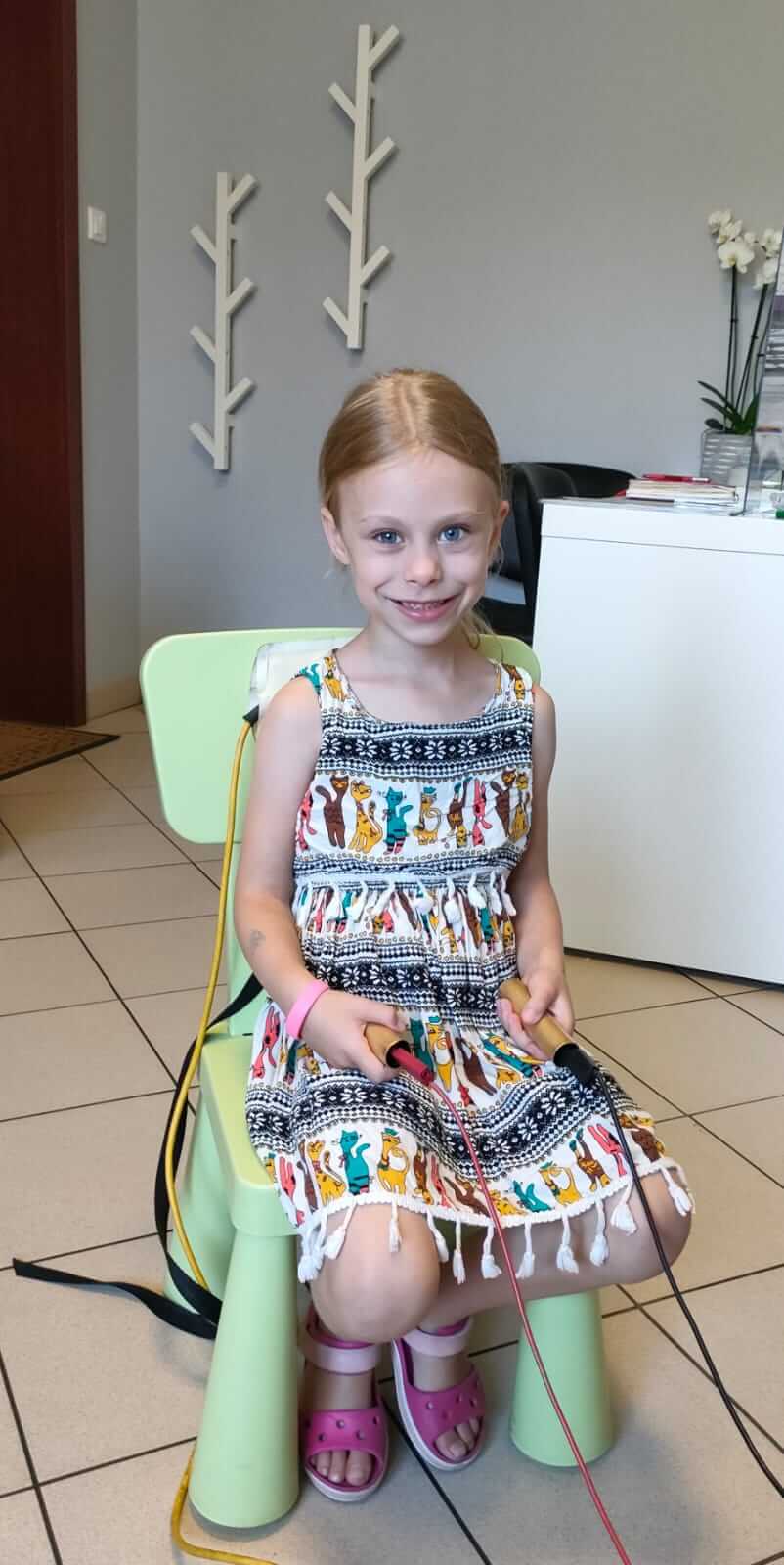
What does a visit look like?
From the clinic door to a ready result — 4 simple steps.
Interview & consultation
We discuss your symptoms and health history and select the allergen panel. The consultation takes about 15 minutes.
Bioresonance test
A painless test with the BICOM Optima device. You hold the electrodes — the device examines reactivity to 90 substances. It takes about 20–30 min.
Immediate result
A list of the substances your body reacted to, together with the strength of the reaction. We discuss the results and suggest next steps.
Desensitisation (optional)
If the result indicates allergens, we can start a desensitising series with the BICOM method right away.
Allergy desensitisation
How does bioresonance desensitisation work?
Non-invasive, painless — no injections and no medication.
Identification
The test indicatively shows the substances your body reacts to and the strength of the reaction.
BICOM desensitisation
The device emits inverted frequencies of the allergen — the body "learns" to tolerate it.
Series of sessions
Many substances are desensitised in one session; central allergens require a series of 3 sessions. A check-up after 2 weeks, and the first re-desensitisation is free.
Effects
Based on the clinic's observations — an easing of experienced symptoms and better wellbeing. First desensitisation free with a test.
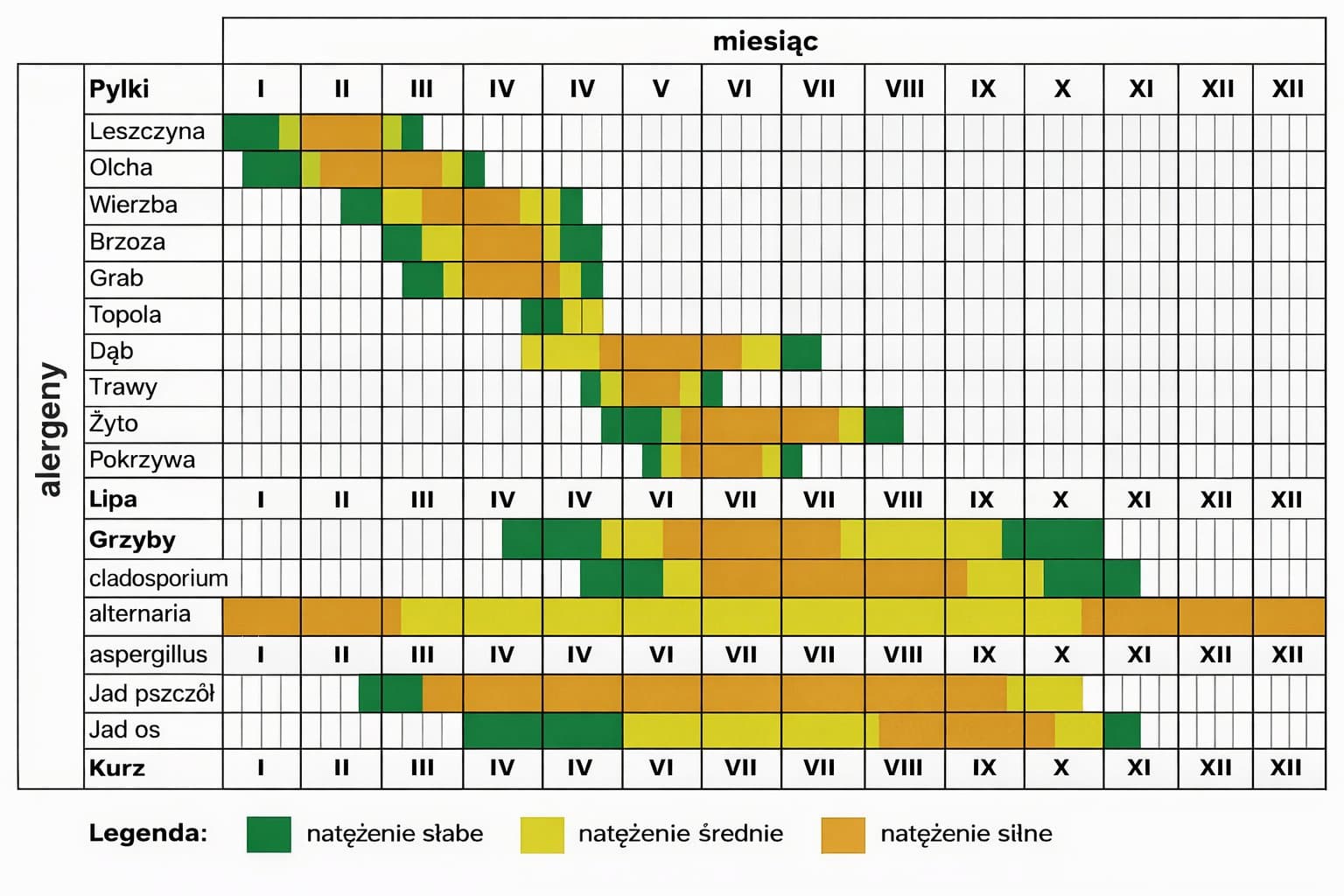
Allergen pollen calendar
When plants pollinate in Poland — low, medium and high intensity across the months.
How to prepare for tests and therapy?
Proper preparation of the body strongly affects the precision of test results and the effectiveness of therapy with the BICOM Optima device.
⏰ Before the visit (24h before the test/treatment)
Hydration
This is the most important point. Drink 1.5 to 2 litres of clean water to ensure proper conductivity in the body.
Stimulants
Strictly avoid alcohol, coffee and strong tea.
Drinks
Avoid cola-type drinks and energy drinks.
Medicines
For 24h before the test please do not use inhalers and (where possible and after consulting your doctor) avoid antihistamines.
5 diagnostic panels
Each panel contains about 90 allergens and substances. Below is a short overview of each panel.
Basic panel
Food and inhalant allergens, animal hair, pollens and dust mites.
Inhalant panel
Pollens, house-dust mites, moulds and animal hair.
Pollen panel
Tree, grass and weed pollens across the season.
Food panel
A wide range of food products and ingredients.
Identification panel
An indicative bioenergetic screening for the presence of various substances and loads. It is not a microbiological test or a medical diagnosis and does not replace laboratory tests.
Important information:
Only one allergen can be desensitised per day and per session. Placing more than one allergen ampoule in the device and charging for each of them is ineffective — the allergens will not be desensitised properly and it reduces the effectiveness of the therapy. Proper desensitisation requires the device to focus fully on one allergen per day.
After the treatment
After the treatment it is worth supporting the body's natural cleansing processes. For 24 hours after the visit:
Drink plenty of water
Drink at least 1.5 to 2 litres of water a day to help "flush out" released substances from the body.
Avoid strain
Refrain from alcohol, coffee, strong tea and sweetened drinks (cola, energy drinks).
Medicines
After the treatment you may take all medicines prescribed by your doctor as usual.
Observation
After therapy you may feel slightly tired or sleepy — this is a natural reaction of the body to the cleansing process.
Allergy test pricing
Frequently asked questions
How many allergens does one test check?
Each diagnostic panel contains about 90 allergens and substances. The clinic has five panels — basic, inhalant, pollen, food and identification. You may also have substances you bring yourself tested (food, medicines, cosmetics, detergents).
Can allergy tests be done on children?
Yes. We also test children — in a calm, painless form. The method is painless and non-invasive — the BICOM Optima device emits no radiation and no electric current.
How long does one desensitisation take?
Only one allergen can be desensitised per day and per session. One session takes about 30–60 minutes (15–30 minutes for children). The number of sessions needed depends on the number and type of allergens.
How quickly are the effects of desensitisation visible?
An initial therapy already takes place while the allergen is being tested. Effects are usually noticeable after a few sessions. With a test, the first desensitisation is free.
How does the basic test differ from the identification test?
The basic test covers food and inhalant allergens, animal hair, pollens and dust mites. The identification test is an indicative bioenergetic screening for the presence of various substances and loads (e.g. microorganisms, metals, pesticides). It is not a microbiological test or a medical diagnosis and does not replace laboratory tests.